
When selling a local brick-and-mortar business, physical presentation is just as critical as the financial statements. A disorganized layout, deferred maintenance, or poorly planned customer zones can raise immediate concerns for prospective buyers during a site walkthrough. Preparing a property-backed commercial space requires a systematic approach to ensure that operations appear efficient, organized, and ready for transition. Buyers seek properties where systems run smoothly and staff areas remain professional. Understanding how these physical aspects influence buyer perception is an essential step in exit planning. For owners looking to understand current market conditions, reviewing a Fort Wayne acquisition market update offers valuable insights into buyer expectations and readiness strategies.
Optimizing the Layout and Customer Flow
First, evaluate the physical flow of the business. Prospective buyers will walk through your facility trying to see it through the eyes of an average customer. If the entryways are cramped or confusing, it suggests operational inefficiencies. Designate clear pathways, keep walkways wide, and remove any display racks or surplus inventory that block visibility.
Establishing clear zones within the property mirrors the concepts used in residential spatial planning. Just as organizing your living room helps define functional family zones, clear layout definitions in a retail store or commercial office guide client movement naturally. Each square foot of commercial space must justify its utility. If a buyer notices underutilized areas or bottlenecks in customer flow, they may assume the business is not operating at maximum capacity.
Upgrading Staff Areas and Storage Zones
Buyers also look behind the scenes. They will examine the employee breakrooms, back-office administration areas, and supply storage closets. Messy breakrooms or chaotic storage spaces send a message of poor management and low employee morale.
Optimize these transition zones. Designing clean, organized staff transition areas can benefit from the principles of thoughtful mudroom designs to ensure that gear, outer garments, and equipment do not clutter primary paths. Keep administrative spaces free of paper piles and secure sensitive files. Ensure that inventory storage uses clear labeling and sturdy shelving. When a buyer visits the back of the house, they should see a structured system that any new owner or manager could step in and run immediately.
Addressing Visible Maintenance and Equipment Health
A major red flag for any business buyer is deferred maintenance. Peeling paint, flickering lights, leaking faucets, or damaged flooring suggest that the owner has neglected the property. Buyers will often use these visible defects to negotiate price reductions or demand expensive inspections.
Conduct a thorough walkthrough to identify and repair minor cosmetic defects. Clean the HVAC vents, replace burnt-out bulbs, and patch minor drywall cracks. If you own the real estate, inspect the exterior, the parking lot, and the landscaping. If your business relies on specialized machinery or commercial kitchen equipment, gather service logs and make sure all units are clean and operational. Buyers are much more comfortable making offers when they see a clean, well-maintained physical plant.
Documenting Space Metrics and Operating Guides
A prepared owner does not just present a clean building; they back it up with written documentation. Create a binder or digital folder detailing the layout of the property, square footage details, utility costs, and maintenance history.
Prepare an operational guide for the facility. This document should explain how to operate security systems, schedule HVAC maintenance, and handle trash disposal. Having these details ready shows buyers that the business operates under established protocols, rather than relying solely on the owner’s daily presence. It reduces transition anxiety and builds trust during the due diligence period.
Telling the Transition Story and Reviewing Indiana Opportunities
As you prepare your physical environment, align your preparation with a clear story of why you are selling and how the business can grow. Buyers want to know that they are stepping into an active, healthy operation.
When looking to sell, it is helpful to review regional competitor listings — see midwest-brokers.com — to see how similar properties position their spaces and operations in the market. Comparing your facility to what is currently listed helps you identify potential areas where your property might fall short or where it holds a distinct competitive advantage. A clean, well-organized workspace, combined with detailed operational logs, helps establish your business as a premium opportunity.
Owner Readiness Checklist for Space Preparation
Use this checklist to ensure your facility is prepared for buyer walkthroughs:
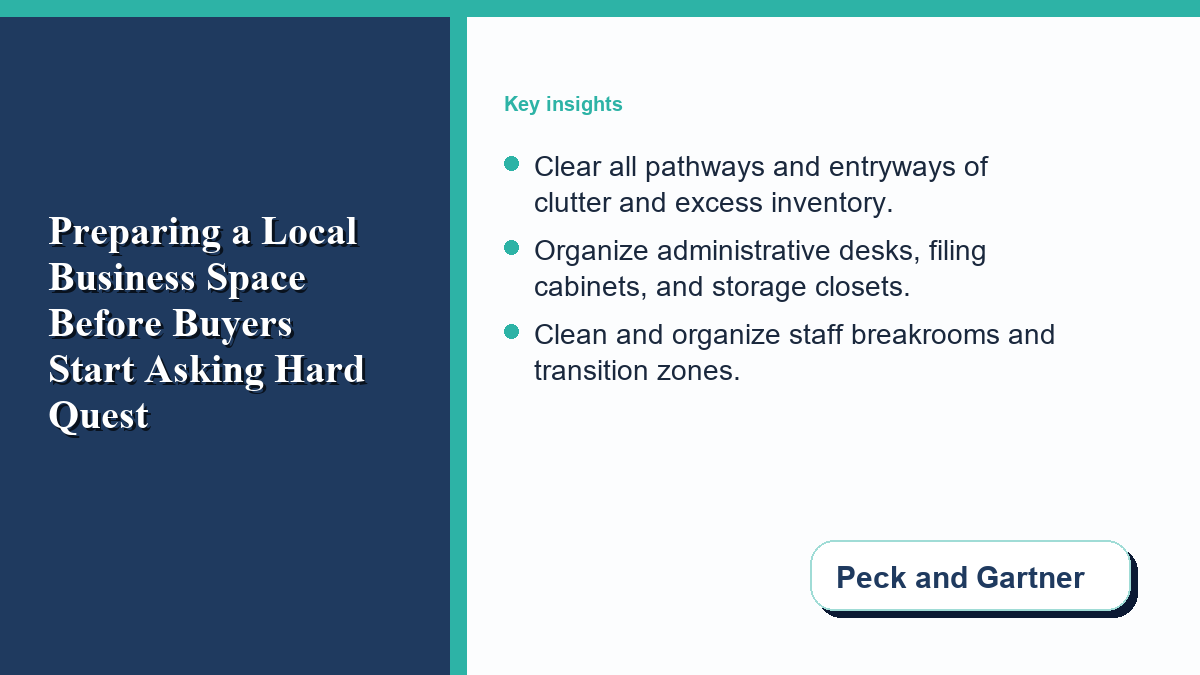
- Clear all pathways and entryways of clutter and excess inventory.
- Organize administrative desks, filing cabinets, and storage closets.
- Clean and organize staff breakrooms and transition zones.
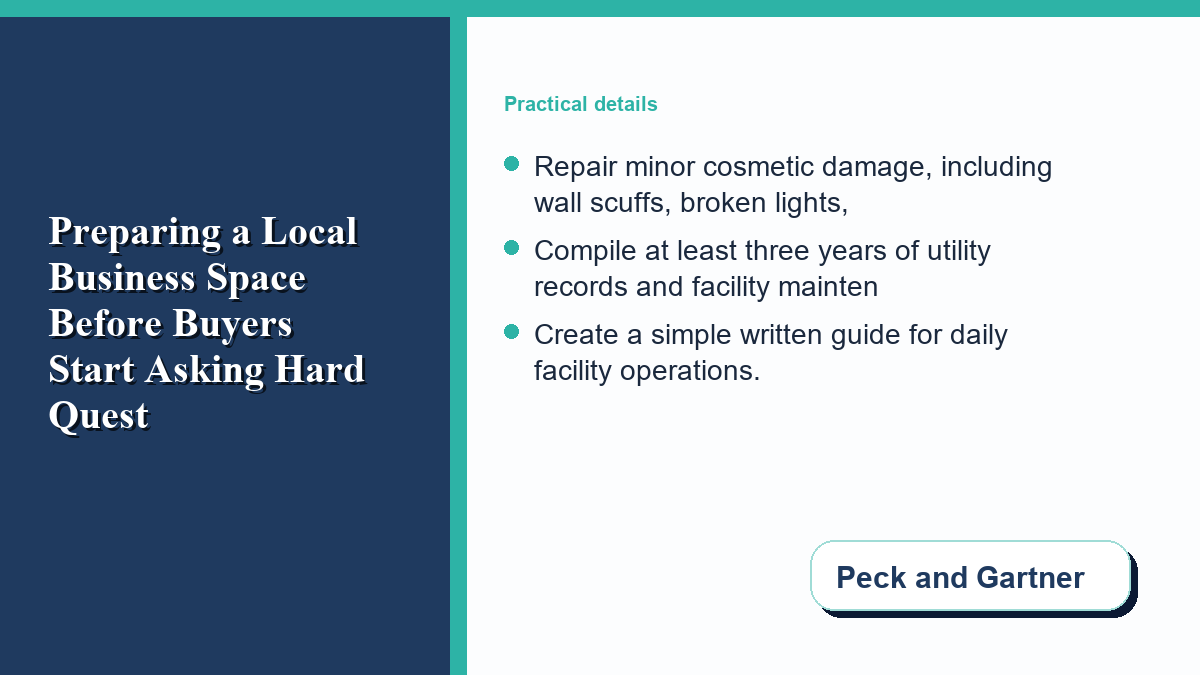
- Repair minor cosmetic damage, including wall scuffs, broken lights, and leaky faucets.
- Compile at least three years of utility records and facility maintenance logs.
- Create a simple written guide for daily facility operations.
Frequently Asked Questions
How clean does the space need to be for a buyer visit?
The space should look clean, professional, and actively managed. It does not need to look like an empty showroom, but all clutter, personal items, and excess inventory should be cleared.
Should I make major renovations before selling?
Generally, major structural renovations do not yield a complete return on investment right before a sale. Focus on low-cost cosmetic repairs, cleaning, and organizing unless a major system is completely broken.
How do I handle proprietary client information during a tour?
Ensure all physical paperwork containing client details is locked in filing cabinets, and all computer screens are locked or display neutral screens.
Disclaimer
This article is for general informational purposes only. It does not constitute legal, tax, valuation, or financial advice. Business owners should consult with qualified professional brokers, accountants, and attorneys before making any decisions regarding the sale of a business or commercial property.

0 Comments